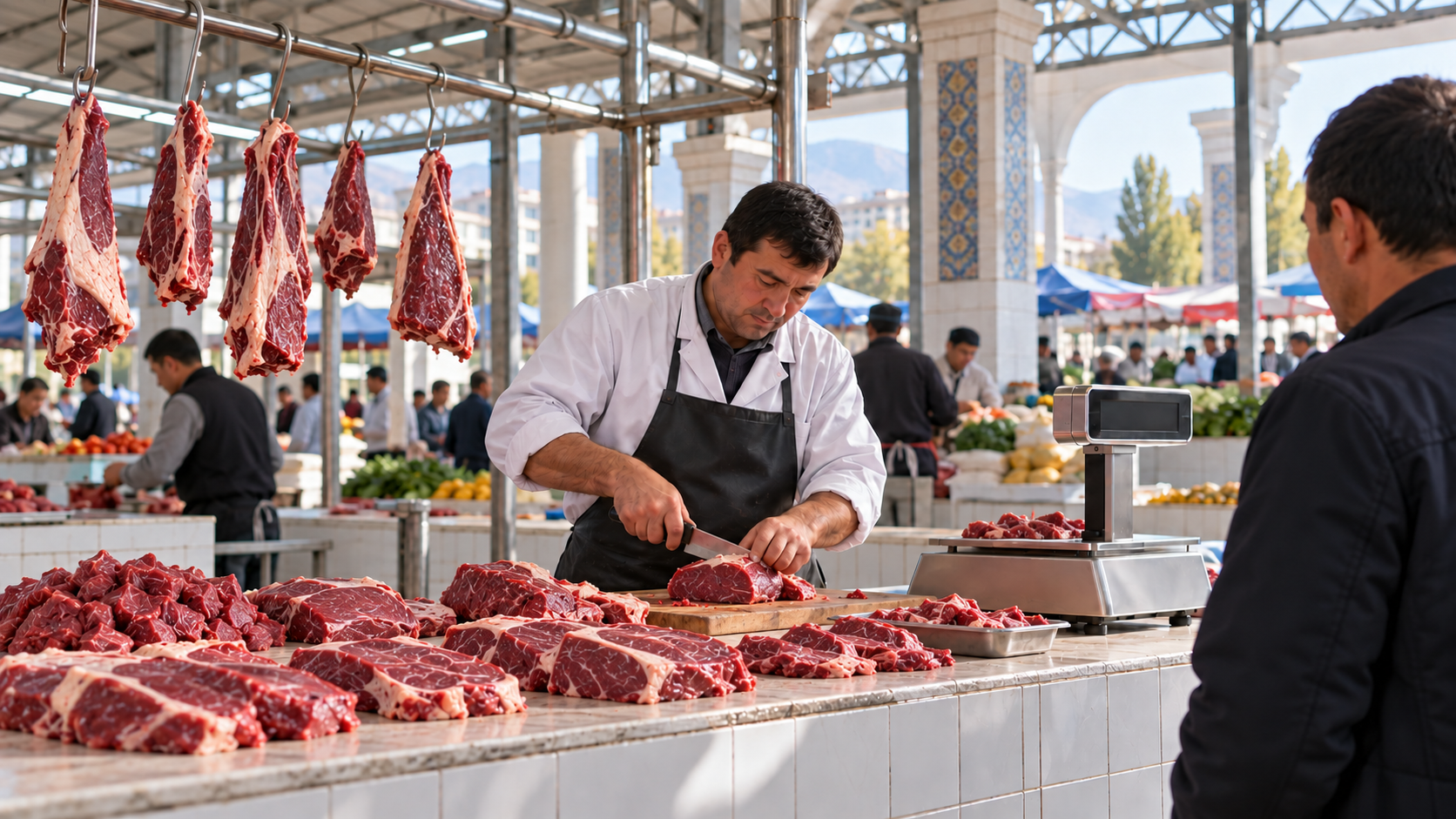







When a shopper sees a price at the market, they usually reduce the problem to its simplest form: the seller bought for 50 and sold for 100, so they made 50 somoni — straightforward enough. But how accurate is that picture, and what actually determines food prices? Is there a single culprit — and can anything be done about it? We tried to answer these questions by analysing ten years of price trends, using beef and flour as examples across four of the country’s administrative centres.
Anatomy of a receipt: why are meat and flour getting more expensive in Tajikistan?
We break down what drives the price of meat and flour — and why food keeps getting more expensive.